Concrete Sidewalk Installation for Lansing Homes
Concrete Sidewalk Installation for Lansing Homes
here is something deeply satisfying about a fresh concrete sidewalk. It’s the path that leads guests to your front door, the track where your kids learn to ride bikes, and a major factor in your home’s "curb appeal."
If you live in Lansing, you know our sidewalks take a beating. Between the humid summers and the salt-heavy, freezing winters, a simple walkway has to be built like a tank to survive. If you’re a homeowner looking to tackle a concrete sidewalk project yourself, or if you just want to know what to look for when hiring a pro, you’ve come to the right place.
In this guide, we’re going to walk through the "how and why" of sidewalk installation so you can ensure your home has a path that lasts for decades, not just a few seasons.
1. Why the "Lansing Factor" Matters for Your Concrete Sidewalk
Before you pick up a shovel, we have to talk about Michigan soil. Around the Grand River and across Lansing, we deal with a lot of clay and varying moisture levels. When winter hits, the water in that soil freezes and expands, which can lift a poorly made concrete sidewalk and snap it like a cracker.
This is why "good enough" isn't actually good enough here. You need a solid subbase and the right concrete mix. If you aren't confident in your DIY skills, checking out a professional concrete pouring service in Lansing might save you a lot of back-breaking rework in three year.
2. Planning and Permits: Don't Skip This!
n many parts of Lansing, the sidewalk in front of your house might actually be city property, even though you’re responsible for maintaining it. Before you start digging:
- Call 811: Never dig without knowing where your gas, water, and electric lines are.
- Check Local Codes: Lansing has specific requirements for sidewalk thickness (usually 4 inches for standard paths and 6 inches for where a driveway crosses the sidewalk).
- Permits: Make sure you don't need a permit for "Right of Way" work if you’re working near the street.
3. Step-by-Step: How to Pour Your Concrete Sidewalk
Step A: Excavation and Prep
The secret to a great concrete sidewalk isn't actually the concrete—it’s the hole you put it in. You’ll want to dig down about 7 to 8 inches. This allows for 4 inches of compactable base (like crushed stone) and 4 inches of concrete.
Step B: The Subbase
Do not pour concrete directly onto dirt or clay! You need a layer of crushed stone or gravel. This provides drainage and a stable "cushion" for when the ground shifts. Use a plate compactor to make sure this base is rock-solid. If the base is soft, your sidewalk will crack.
Step C: Forming
Use 2x4 lumber to create the "frame" for your sidewalk. Use a level to make sure the forms have a slight "pitch" (slope). You want water to run off the sidewalk, not pool in the middle or run toward your home’s concrete foundation.
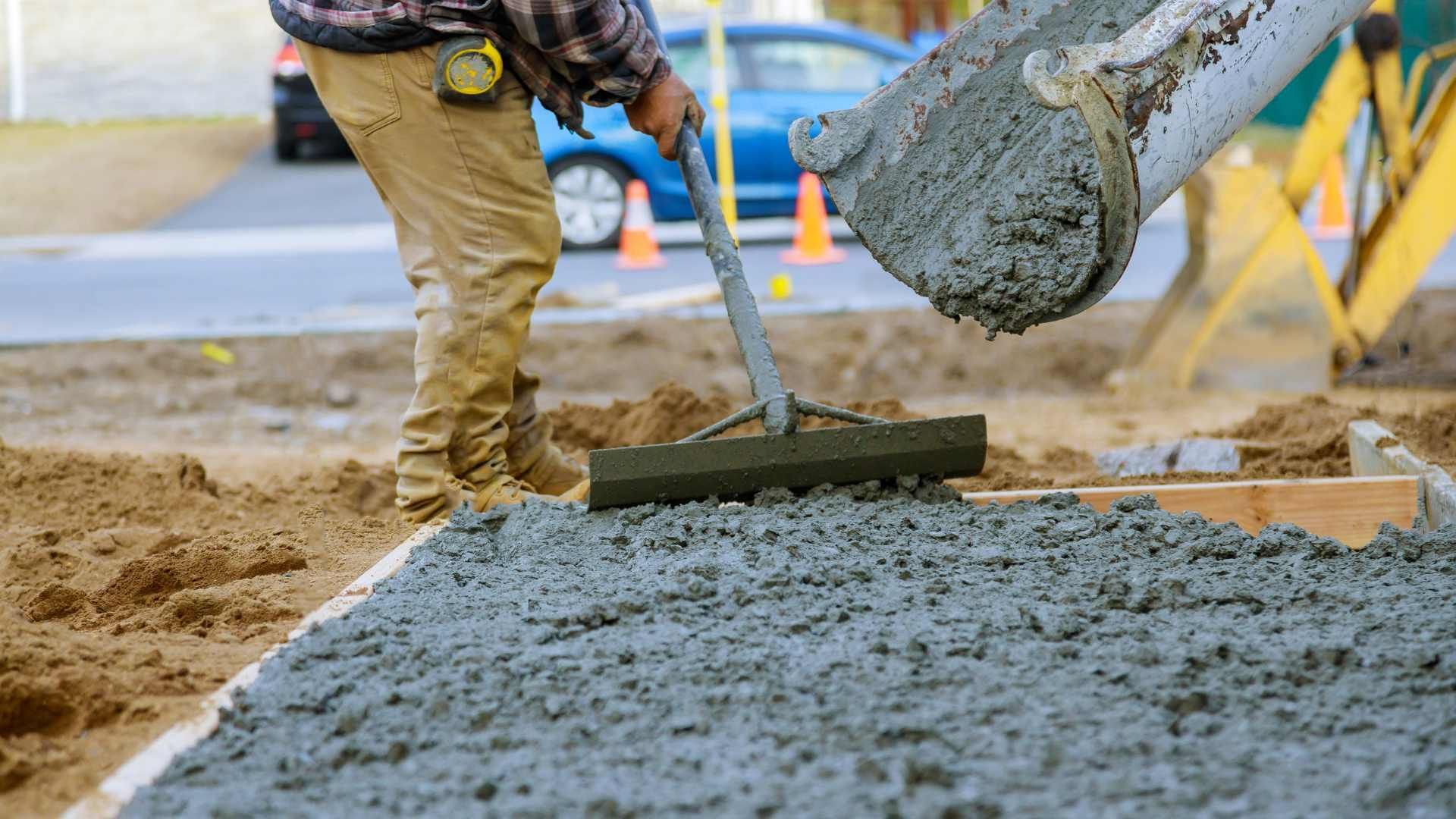
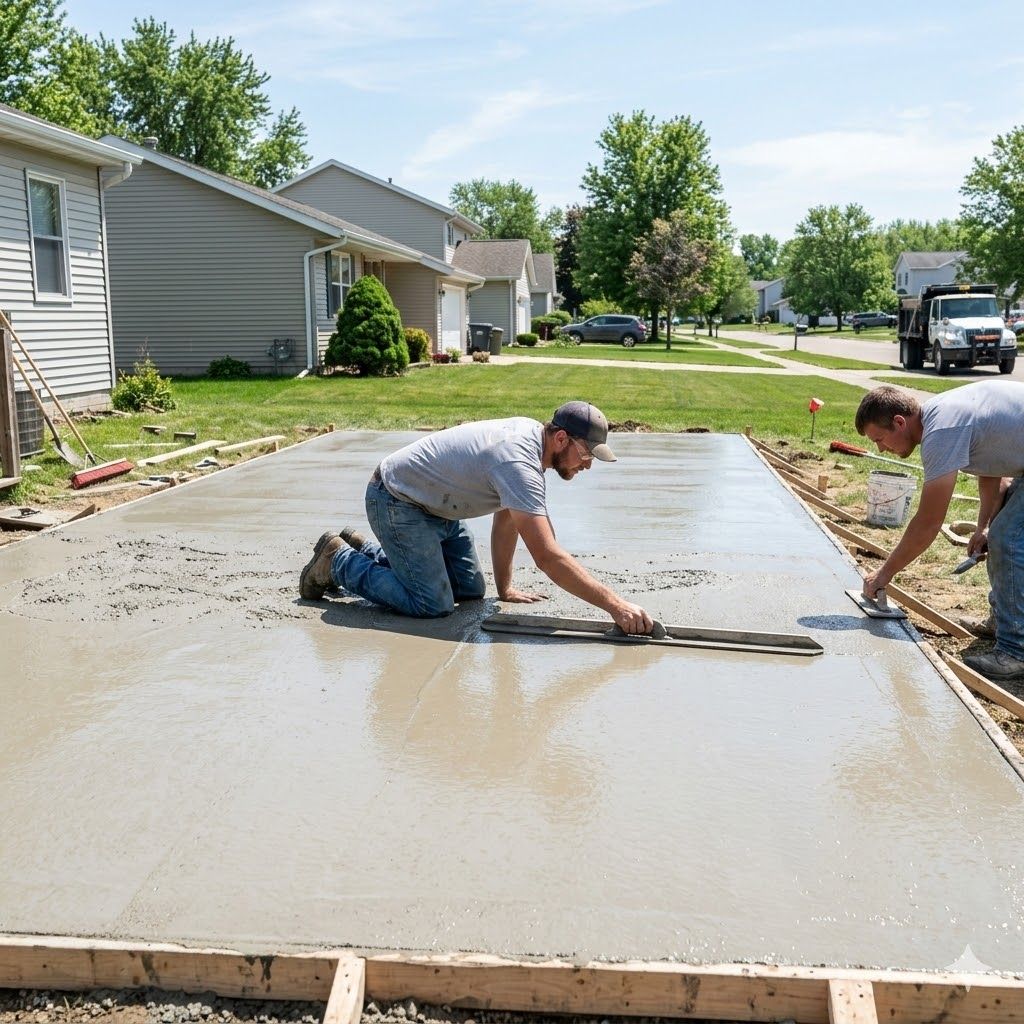
Step D: The Pour
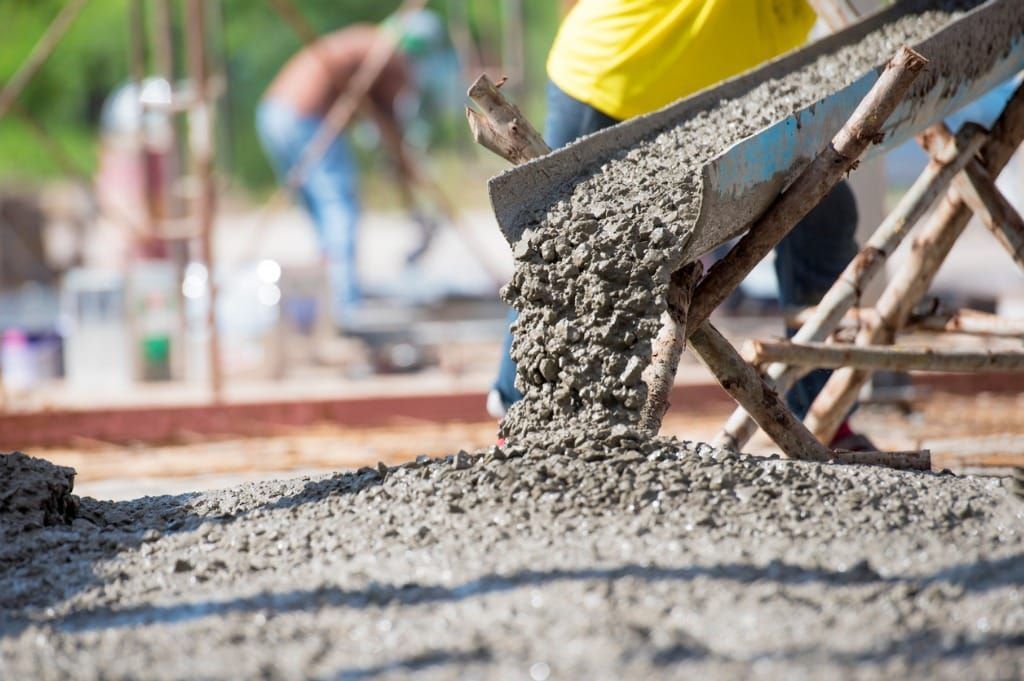
This is the "main event." When the truck arrives (or you start mixing bags), you have to move fast.
- Screeding: Use a long, straight board to "saw" back and forth across the top of the forms to level the wet concrete.
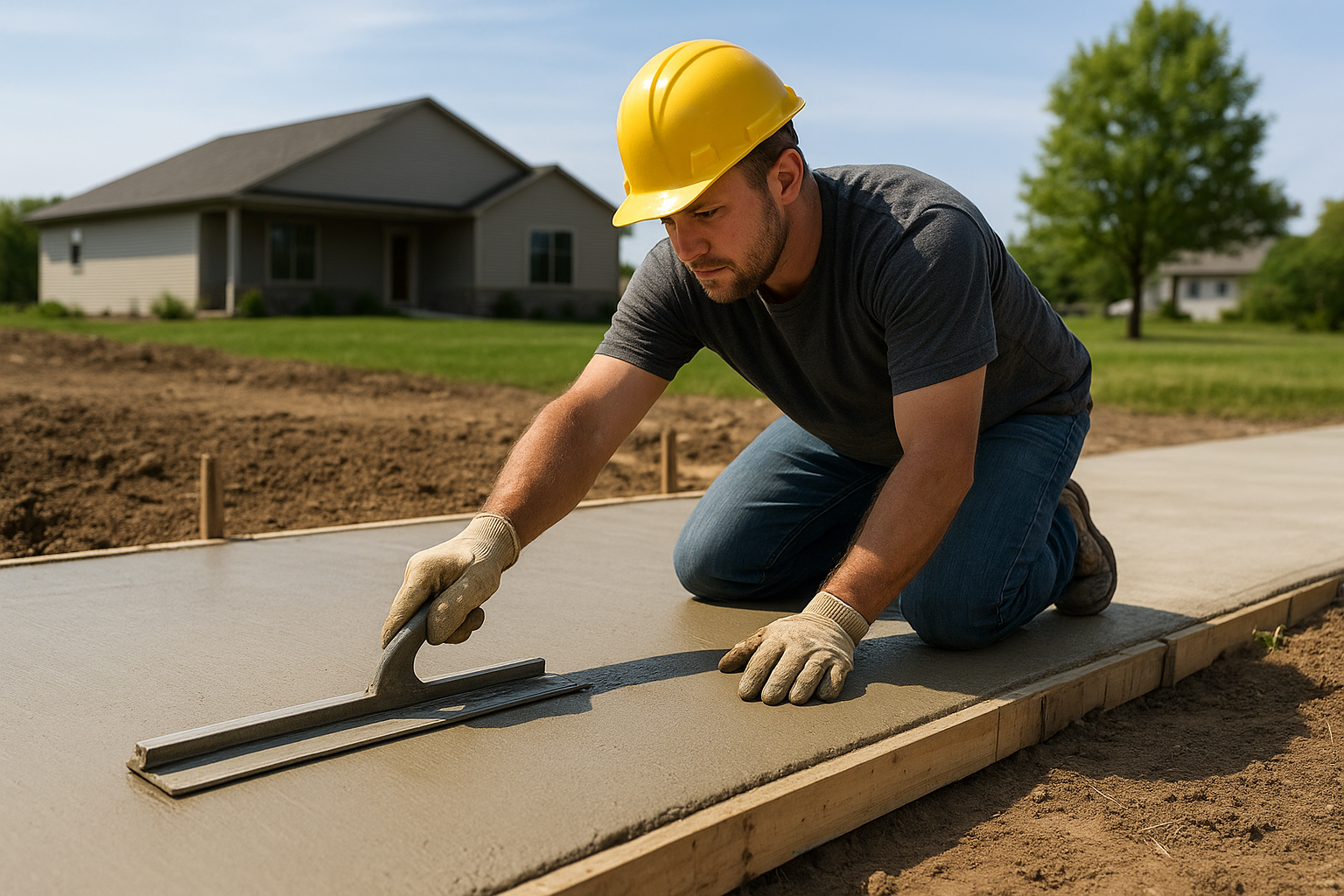
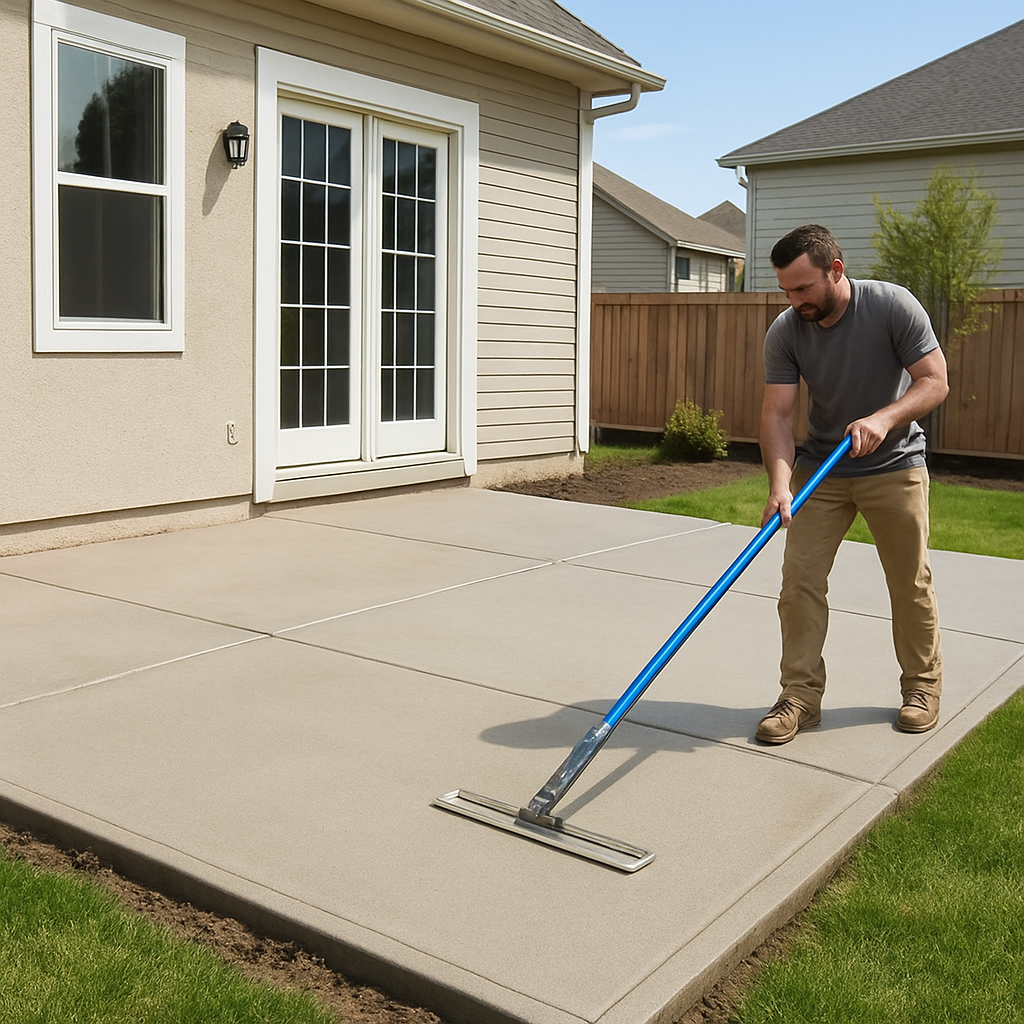
- Floating: Use a "bull float" to push down the aggregate (the big rocks) and bring the "cream" to the top. This gives you a smooth finish.
- Edging: Use an edging tool to create that nice rounded edge that prevents chipping.
4. Elevating the Look: Stamped Concrete Sidewalks
Standard gray concrete is fine, but if you want your Lansing home to really pop, you should consider stamped concrete.
By using rubber mats to press patterns into the wet surface, we can make your concrete sidewalk look like slate, cobblestone, or even wood planks. It’s the same durability as a standard pour but with a high-end designer look. Many homeowners start with a standard path but realize that a stamped concrete service in Lansing adds much more value to the property.
"A sidewalk is the literal 'red carpet' for your home. Why settle for plain gray when you can have a masterpiece?" —
Lansing Paving Consultant
5. Common DIY Mistakes to Avoid
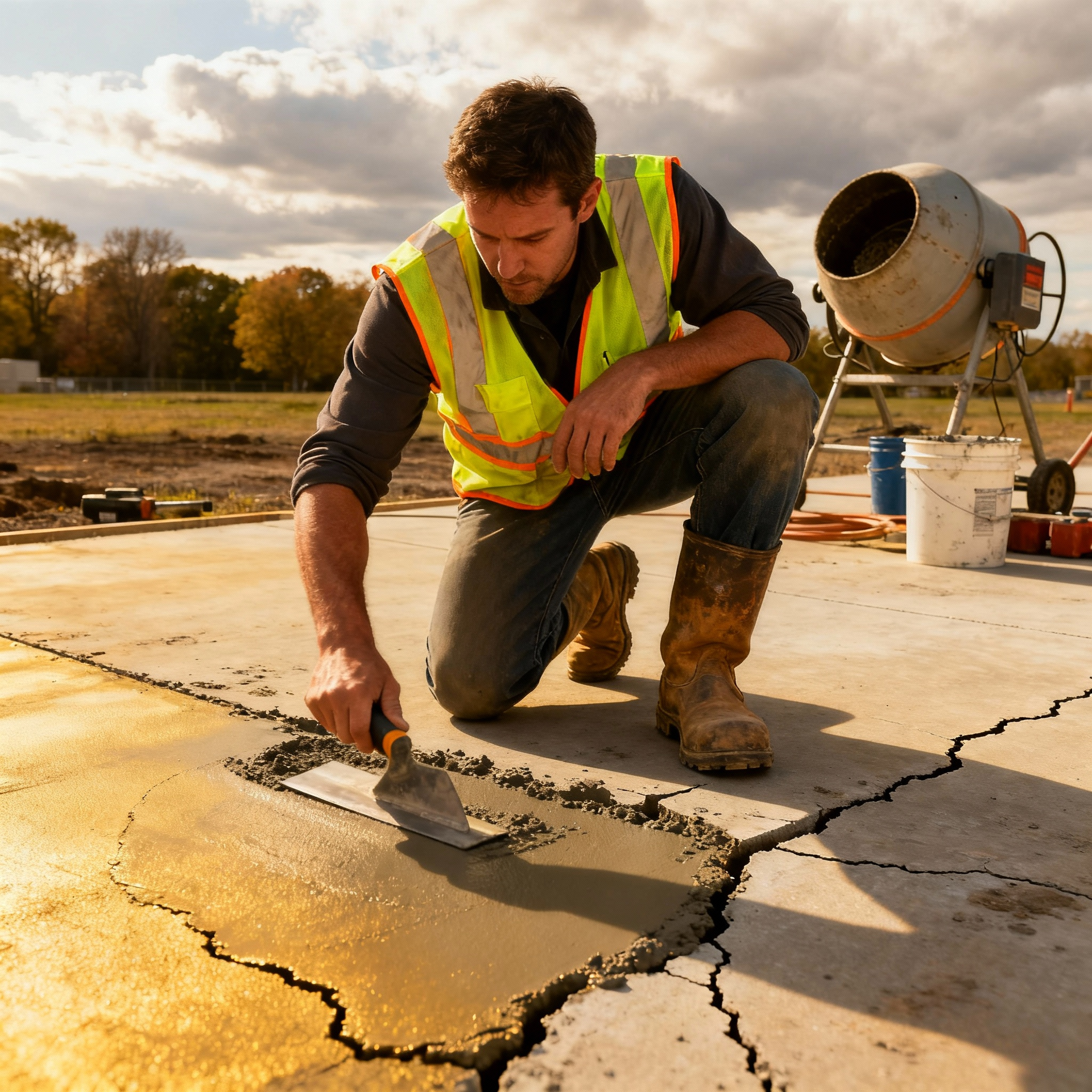
We see a lot of "oops" moments when we're called for concrete repair in Lansing. Here are the big ones:
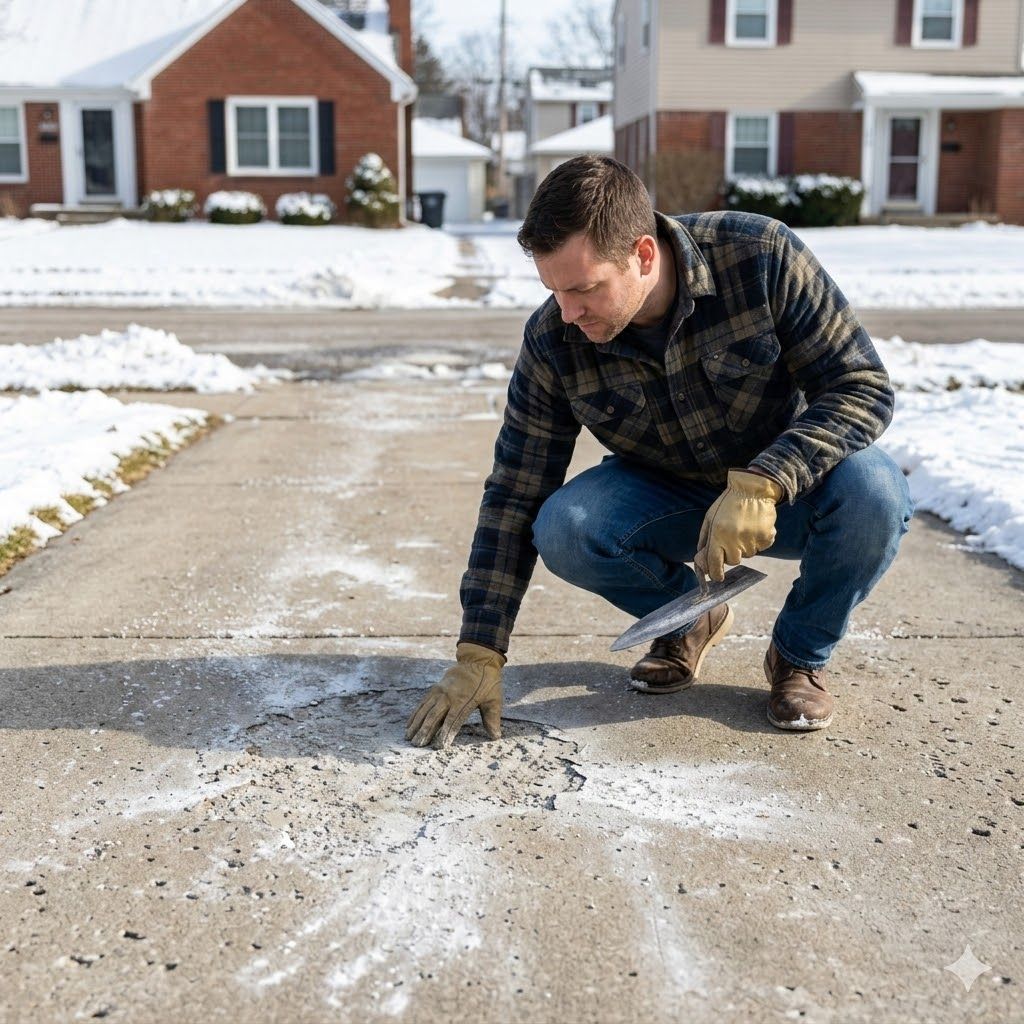
- Adding Too Much Water: It makes the concrete easier to spread, but it ruins the strength. It leads to "scaling," where the top layer flakes off after the first winter.
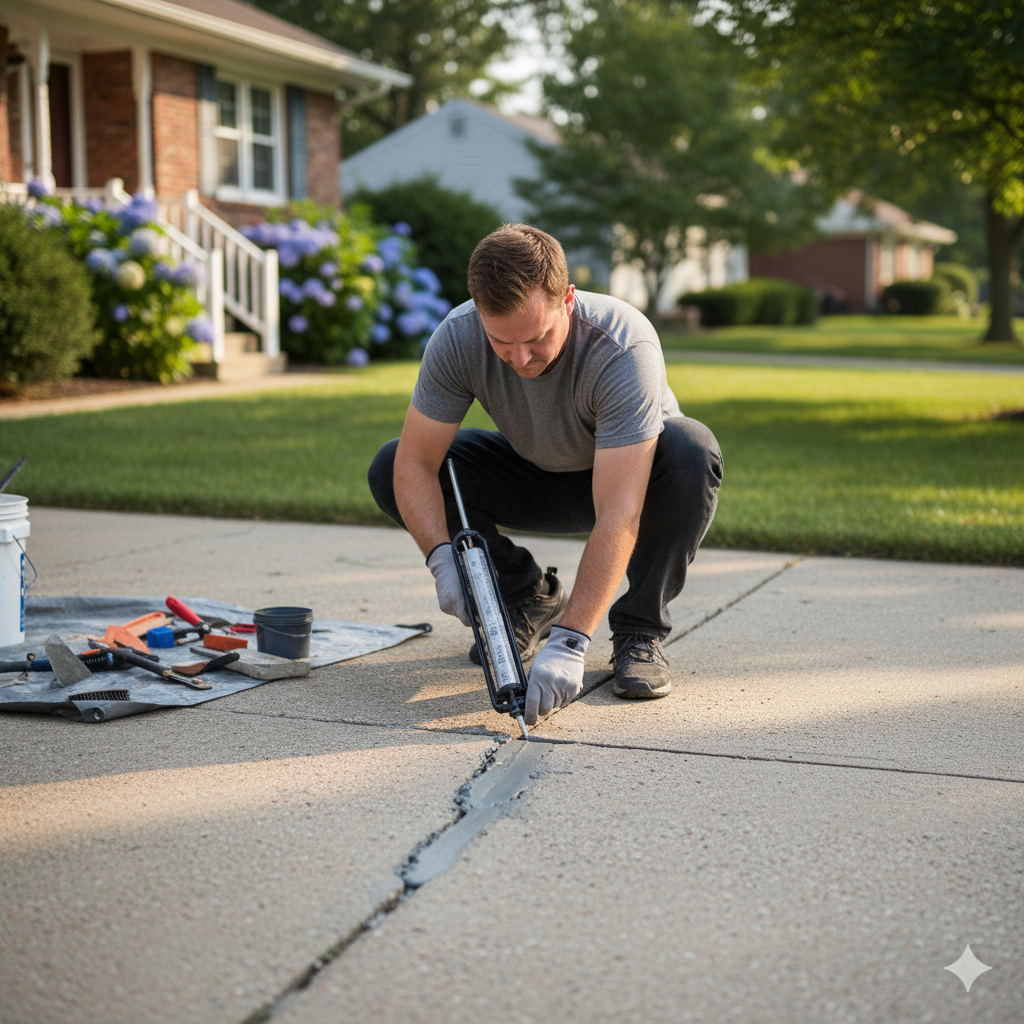
- Ignoring Expansion Joints: Concrete will crack. Expansion joints (the deep lines you see every few feet) tell the concrete where to crack so it stays in a straight line.
- Poor Curing: If the concrete dries too fast, it becomes brittle. In the hot Michigan summer, you may need to mist your new concrete sidewalk with water or use a curing compound.
6. Maintenance: Keeping it Beautiful
- Seal It: Just like your concrete driveway, your sidewalk needs a sealer to keep out moisture and salt.
- Avoid Salt: Try to use sand or "concrete-safe" de-icers. Standard rock salt is brutal on new concrete.
- Watch for Settling: If you notice one slab starting to tilt, check out our 7 urgent signs you need concrete repair before someone trips.
Lansing Construction Statistics
According to the
Michigan Concrete Association, sidewalks in the Great Lakes region that are installed with a minimum of
4,000 PSI concrete and air-entrainment (tiny air bubbles mixed in) are
60% less likely to suffer from "spalling" or surface flaking caused by winter road salt. Additionally, a well-maintained walkway can add up to
$3,000 to $5,000 in perceived value to a residential property in the Lansing market.
FAQ: Sidewalk Installation Questions
How long before I can walk on my new sidewalk?
Usually, you can walk on it after 24 hours. However, keep the dog and the heavy wheelbarrows off of it for at least 7 days.
Why did my sidewalk crack so soon?
In Lansing, it’s usually due to a poor subbase or a "flash dry" where the sun sucked the moisture out of the concrete too fast. If the cracks are large, you might need a concrete installation service to replace the damaged section.
Can I pour concrete over my old, cracked sidewalk?
We don't recommend it. The cracks in the old sidewalk will "reflect" through to the new one very quickly. It’s always better to tear out the old stuff and start fresh.
Is stamped concrete more slippery?
It can be, but we add a "non-slip" grit to the sealer so it’s safe for the rainy Michigan spring.
Conclusion: Take Pride in Your Path
Whether you decide to spend your weekend digging and pouring or you decide to hire the pros at Precision Paving Lansing, a new concrete sidewalk is an investment you won't regret. It transforms the look of your home and makes your property safer for everyone.
If you’re feeling a bit overwhelmed by the thought of mixing 60 bags of concrete by hand, or if you want to explore the world of stamped concrete for a truly custom look, we’re here to help.
Don't let your curb appeal crumble.
Contact us today for a free estimate on your next sidewalk or concrete patio project. Let’s build something that lasts!